
What Is a THC Energy Drink?
A THC energy drink is a new kind of performance beverage designed to deliver energy, focus, and euphoria — without the sugar rush or crash of traditional energy drinks. Instead of relying solely on caffeine and synthetic additives, these drinks harness the body’s own endocannabinoid system to provide balanced, sustainable fuel.
This isn’t about getting high and spacing out. It’s about using microdosed, fast-acting THC to promote focus, motivation, and recovery.
Why THC Works Differently
Most energy drinks flood your body with caffeine and sugar, spiking adrenaline and dopamine before leaving you drained¹. A THC energy drink works differently — it targets the CB1 and CB2 receptors in your body’s endocannabinoid system, which regulates motivation, mood, and recovery².
In small, controlled doses, THC enhances dopamine release³ and amplifies the “feel-good” sensations that make exercise more rewarding. Combined with natural caffeine sources like green coffee, this creates a clean, sustained energy curve instead of a spike and crash.
Nano-THC: The Game Changer in Energy Drinks
The problem with most cannabis edibles and beverages is predictability — you never know when they’ll kick in. That’s why nano-emulsified THC has changed the game.
Nano-THC is broken into microscopic particles that your body absorbs faster and more efficiently⁴. Instead of waiting an hour, you feel the effects in 15–20 minutes, making it ideal for pre-workout timing.
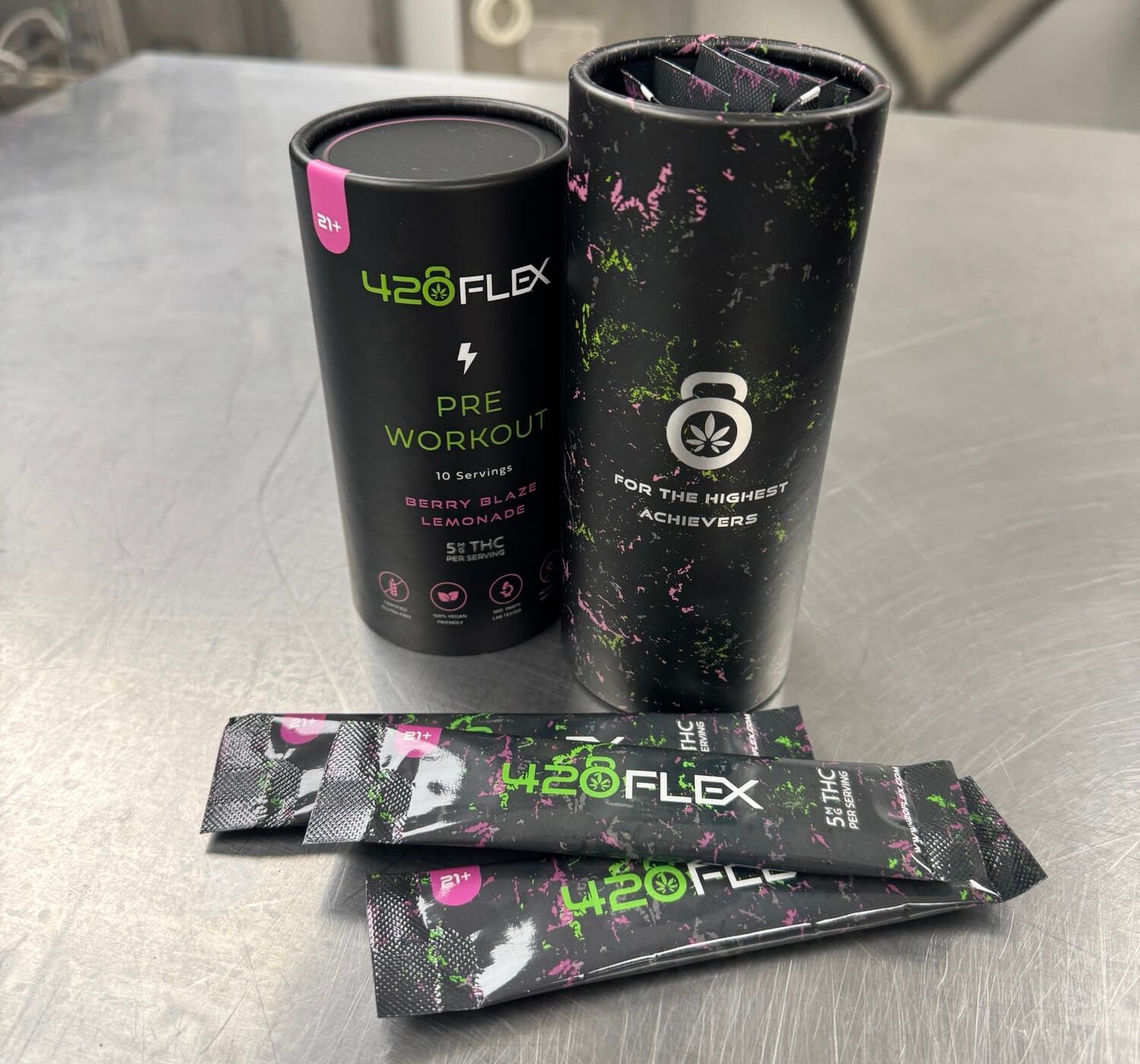
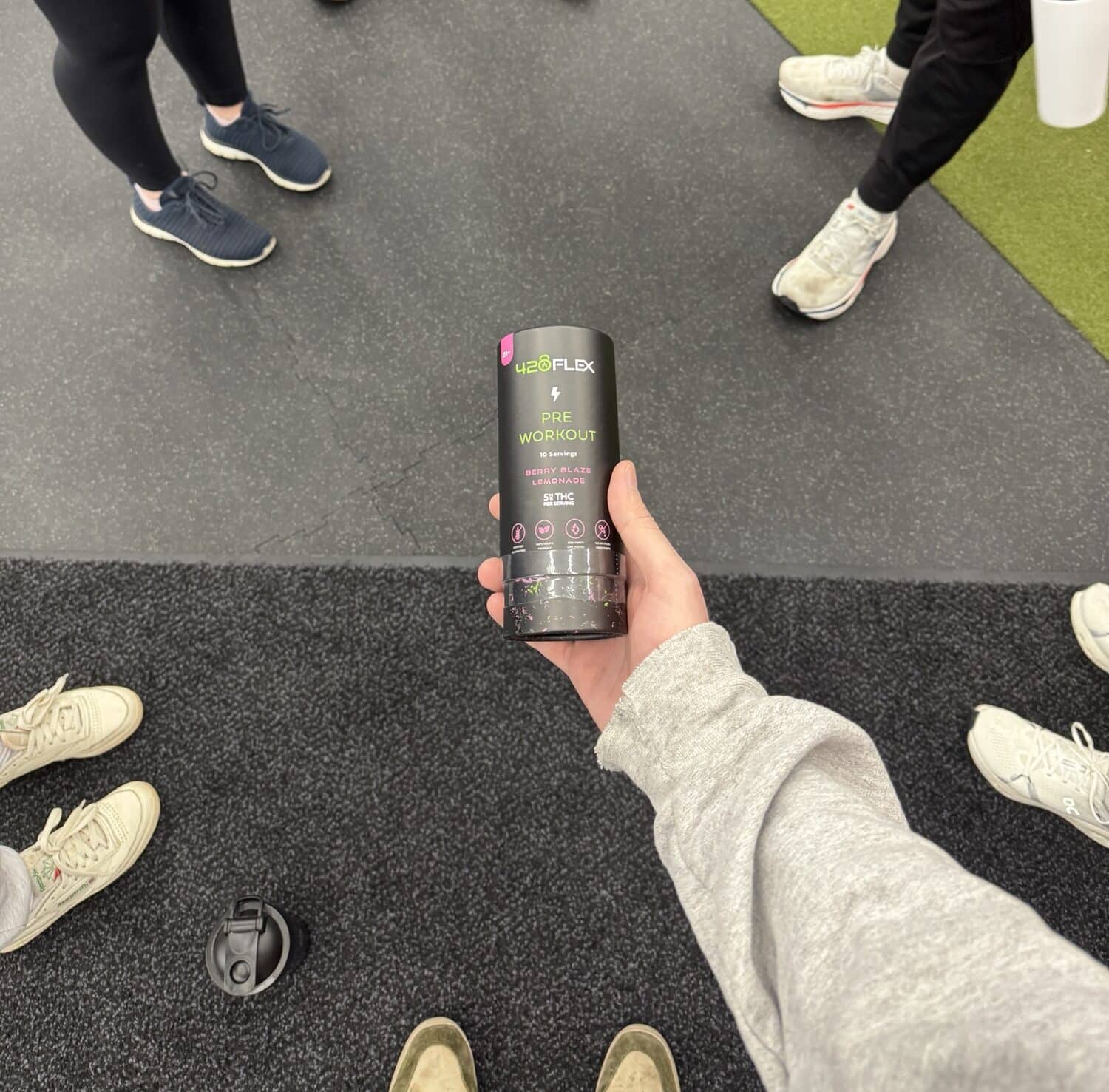
420 Flex’s Berry Blaze Lemonade THC Pre Workout uses nano-emulsified THC for exactly this reason — faster onset, smoother experience, and consistent potency.
THC Energy Drink vs. Traditional Energy Drinks
Here’s how a THC energy drink compares to conventional brands:
| Traditional Energy Drink | THC Energy Drink |
|---|---|
| High caffeine and sugar content | Low caffeine, no sugar |
| Energy spike and crash | Smooth, sustained focus |
| Artificial colors and preservatives | All-natural ingredients |
| Can cause jitters and dehydration | Promotes calm, hydrated focus |
| No recovery benefits | Reduces inflammation and supports recovery |
Energy drinks like Red Bull or Monster rely heavily on sugar and synthetic caffeine to achieve quick stimulation⁵. The downside? Elevated heart rate, energy crashes, and dehydration.
A THC energy drink, by contrast, provides mindful stimulation — a steady flow of energy and focus that feels natural.
THC for Recovery and Mind-Muscle Connection
A growing number of athletes use THC not only for energy but also for recovery. Studies suggest THC and CBD help reduce inflammation and soreness after intense workouts⁶.
THC also deepens the mind-muscle connection, allowing you to focus more intently on form and movement⁷. This unique cognitive state can make your workouts feel more immersive and rewarding.
When combined with amino acids like L-citrulline, betaine, and taurine — found in 420 Flex — THC creates a synergy that enhances both performance and pleasure.
The Future of THC Energy Drinks
With cannabis legalization expanding and wellness culture shifting toward natural ingredients, THC energy drinks are poised to redefine the energy supplement category.
Brands like 420 Flex lead the charge — merging fast-acting THC with clean energy from nature. Each scoop delivers predictable potency, hydration support, and a focused, euphoric lift that caffeine-heavy products can’t replicate.
If you’re ready to feel what balanced energy really means, explore Berry Blaze Lemonade THC Pre Workout and view our testing results for full transparency.
References
- Mayo Clinic. Energy drinks: Are they safe? (2022).
- Zou S., Kumar U. Cannabinoid Receptors and the Endocannabinoid System. Int. J. Mol. Sci. (2018).
- Volkow N.D. et al. Dopamine, reward, and addiction. Journal of Neuroscience (2017).
- Bajaj S. et al. Nanotechnology in Cannabis Products: Bioavailability and Efficacy. Frontiers in Nanotechnology (2021).
- Cohen P.A. et al. Energy drinks and health: A review. Frontiers in Public Health (2019).
- Anil S.M. et al. Medical cannabis activity against inflammation. Frontiers in Pharmacology (2022).
- Frontiers in Psychology. Cannabis, cognition, and creativity. (2020).